
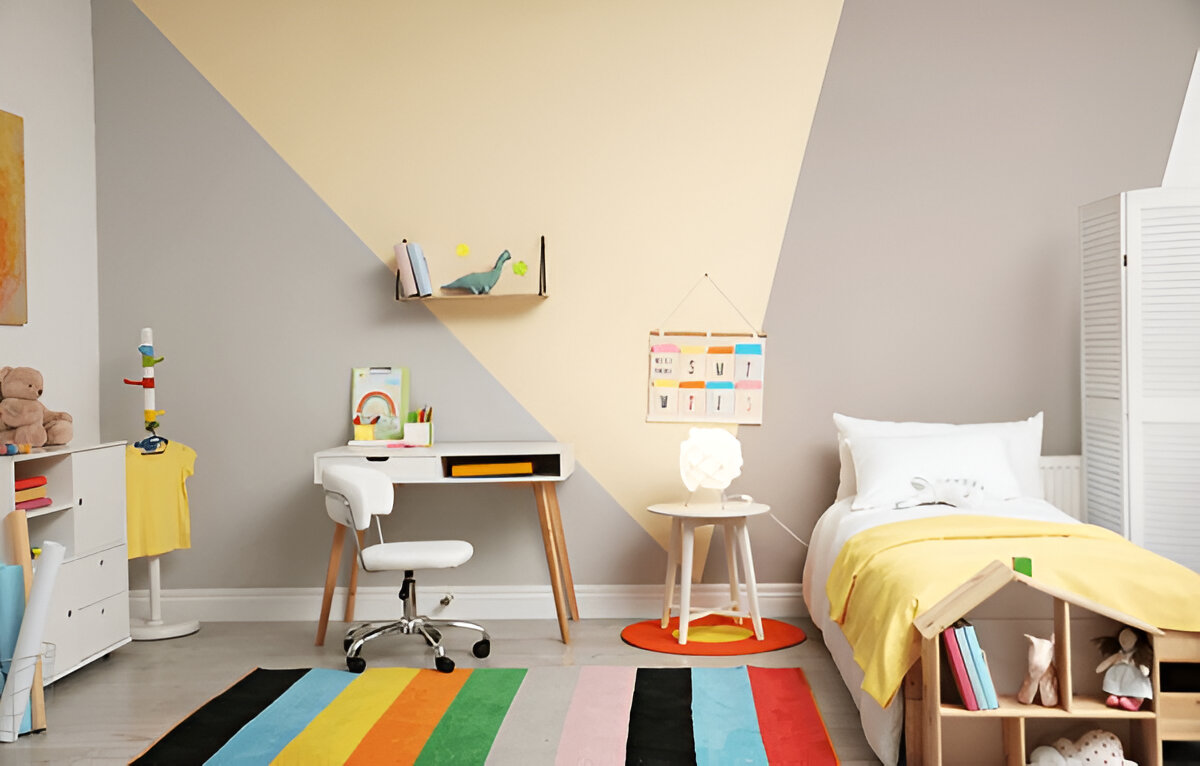
Imagine being scooped up in your room the entire day and struggling hard to finish the syllabus right before your exam or rushing to complete the exciting novel you are reading, relying on one awkward light from the window or a dim table lamp. Well, it might sound fun, cozy or adventurous, but the stress it causes your eyes is surely not fun.
Proper lighting in your study room is not just aesthetics; it is a necessity. It plays a critical role in boosting concentration, reducing eye fatigue and maintaining overall health. Whether you are enjoying a great book or cramming for exams, you need a healthy studying environment and our guide to study room lighting is just what you need!
Why does study room lighting matter?
Study room lighting plays a huge role in how you optimize your reading space and also stay productive.
- Reduce eye strain: Proper lighting while you read from your book or laptop is crucial so that your eyes do not have to work hard. This also helps reduce discomfort, headaches and blurry vision.
- Improves focus: Maybe your lack of focus is not just your interest, but also poor lighting that breaks concentration.
- More comfort: It might be a psychological trick, but when you study in your study lights, it might help you learn and understand quickly as your mind is just more comfortable and confident.
Types of study room lights
There are a lot of study room lights or lights that can be used in your study room. Some of the most common ones are:
- Ambient Lighting
Also called ‘general lighting’, these lights are the primary source of light in a space or room. It provides perfect illumination without causing too much glare or dimness.
This central source of light usually comes from chandleries, track lighting, tubelight, LED lights, wall mounted fixtures, ceiling lights or wall lights.
Buy study room ceiling lighting at The Light Kart for perfect ambient lighting.
- Task Lighting
As indicated by the name, task lighting is a kind of lighting that focuses on a particular area. These lights focus on certain areas that are used for certain tasks. They are not central light sources like ambient lights but used more for smaller objects. It also helps provide increased light for tasks that might need more precision and accuracy like reading, sewing or writing.
Some of the most common task lighting fixtures are potable desk lamps, pendant lights, cabinet lights, vanity lights, mirror light, table lamps or floor lamps.
- Accent Lighting
Accent light is used to add more flare to your favorite item or object. It attracts attention towards some specific detail you want to highlight in a space. It is often used for paintings, sculpture, wallpaper, wall art or more. If you use accent lights properly, you can change the look and feel of your room.
Some of the most examples of accent lights are candle lights, direct track lights, chandeliers with dimmers, wall sconces or floodlights.
Best light for study room
A well-organized study space is not just important for students, but also those who work from home. As most of our work has now shifted online, the constant glaring into the screen can be tiring and harmful for the screen, especially if it is done with poor lighting. So here are some of the best lights for study rooms:
- Natural Light
While artificial lights may help with reading and writing, the best source is always natural lighting. It keeps your eyesight in check and minimizes your stress. Try to position your desk near a window to make bets use of natural light.
- Table and Desk Lamps
Another popular option when it comes to reading and writing is use of table and desk lamps that are not only functional, but also decorative. There are multiple options for table lamps that keep your room brights and allow you to study without any strain.
Desk lamps are more flexible as they can be rotated and twisted based on your comfort. They also provide task lighting by illuminating only your study area.
Get the best table and desk lamps for your needs here.
- Floor Lamps
While floor lamps work similarly to table lamps, they just need a bigger space. They can be useful to define a small cozy reading nook in the corner of your study room and also being a standalone decorative piece. You can easily change the location of the floor lamps and its versatility allows you to change the bulbs to suit your lighting needs.
Buy stunning floor lamps at The Light Kart.
- Pendant Lighting
These are fixtures that are suspended from the ceiling with the help of a chord, metal rods or chains. They are cheaper than chandleries and get the work done just the same. With the range of beautiful and charming pendant lights in the market these days, you can get your study room to look fashionable as well as cozy. You can use these lights right above your seating or studying area. They also help save space as they are suspended from the ceiling and give you more floor space and surface area.
Get pendant lights to enhance your study room here.
- Wall Mounted Lighting
These lights are super convenient and are best for those who read more books. They also help save space in the room. However, it is important to position them properly and strategically.
Buy wall mounted lights for your reading nooks here.
Pro Tip: Use ‘smart’ LED bulbs for any of the lighting fixtures that can be easily controlled by your smartphone. Not only can you switch it on and off with your phone but also adjust the light settings.
While lighting up your room for studying can be a highly personal choice, it is always better to aim for 300 to 500 lumes per square meter (lux). This will ensure perfect light without it being too harsh or light.
Some areas like reading or writing zones might also need 500 to 500 lux for optimal focus.
As stated above, a range of 300-500 lux is good and comfortable for your study room.
Here are some study room lighting arrangement ideas:
A fully lit room is best for studying as it reduces eye strain, helps maintain focus and also improves alertness. Dim light, on the other hand can cause fatigue, make reading difficult and also impact productivity.
You can light your study room in many different ways, but here are some study room lighting ideas:
- Try and use more natural light.
- Use overhead light in a way that avoids shadows.
- Avoid glare by positioning lights properly.
- Use warm-white LED bulbs.