
Whether you’re someone who is renovating your home, building a new house, or just entering the new world of illumination, it can feel a little bit overwhelming. By now, if you would have read any of our guides or blogs on the different lighting styles, you would have noticed that there are certain terminologies that are often used to describe certain types of lightings based on their functionality and illumination.
Knowing the different kinds of lighting is extremely important, especially if you are someone who is trying to choose the right sort of lights for your house. Understanding the different lighting terminologies will give you a better understanding of what light you should choose to create the right atmosphere, improve functionality, and maximize energy efficiency in your home or workplace.
This comprehensive guide will explain the common lighting terms and help you make informed decisions about your spaces effectively.
Types of Lights by Function
- Ambient light : It is the most general sort of lighting and is the foundation of any lighting scheme. It is the major source of illumination in a room that helps you navigate the place comfortably and safely. It can be considered as a base layer that fills the entire space with a comfortable level of brightness.
The most common sources of ambient lighting are chandeliers, recessed lightings, track lightings, and ceiling-mounted fixtures. Ambient lighting usually creates uniform light distribution throughout the room without creating shadows or harsh spots. Whenever you are considering ambient lighting in the room, you should consider the room’s size, ceiling height, and light availability to determine the appropriate brightness level.
- Task Lighting : When lights are used specifically for a particular purpose and illuminating areas where certain activities are performed, then it is known as task lighting. This could be for tasks such as reading, cooking, working, applying makeup, or anything. Task lighting provides focused illumination exactly where you need it.
Reading lights, table lamps, vanity fixtures, mirror lights are examples of task lightings. These lights are directional, provide visibility for specific tasks without straining your eyes, and are brighter than the ambient lights.
- Accent Lights : These lights are mostly used to add more drama and depth to your space. It can also be used to highlight specific objects, features, architectural elements, art, or anything of pivotal focus in the room.
Wall-mounted picture lights, directional spotlights, or track lightings are commonly used for accent lighting. These lights are supposed to be brighter than the ambient lighting so that a contrast can be created and your eye is drawn to the featured elements.
Installation Types and Fixture Mountings
- Recessed Lighting : Recessed lightings are fixtures that are installed into the hollow openings in the ceiling. They are also known as downlights or can lights. Recessed lightings create a clean and minimalistic appearance as only the trim and the bulb is visible from below whereas the housing is above the ceiling light. These lights can be used in every room and working spaces. They are the most popular in kitchens, bathrooms, and hallways where we need light that is non-restrictive.
Recessed lightings can come in various sizes and can be used for task lighting or ambient lighting depending on where it is placed and its beam angles.
- Wall Mounted Fixtures : Wall mounted fixtures or scones are lights that are directly attached to the walls. They provide ambient lighting in hallways or rooms or accent lighting to highlight architectural features. They are most often used in hallways, rooms, or even your outdoor walls.
They are particularly useful in rooms where the ceiling space is limited and the bedroom space is a little smaller. These fixtures are installed at heights between 60 to 72 inches from the floor and but can vary depending on its use and ceiling heights.
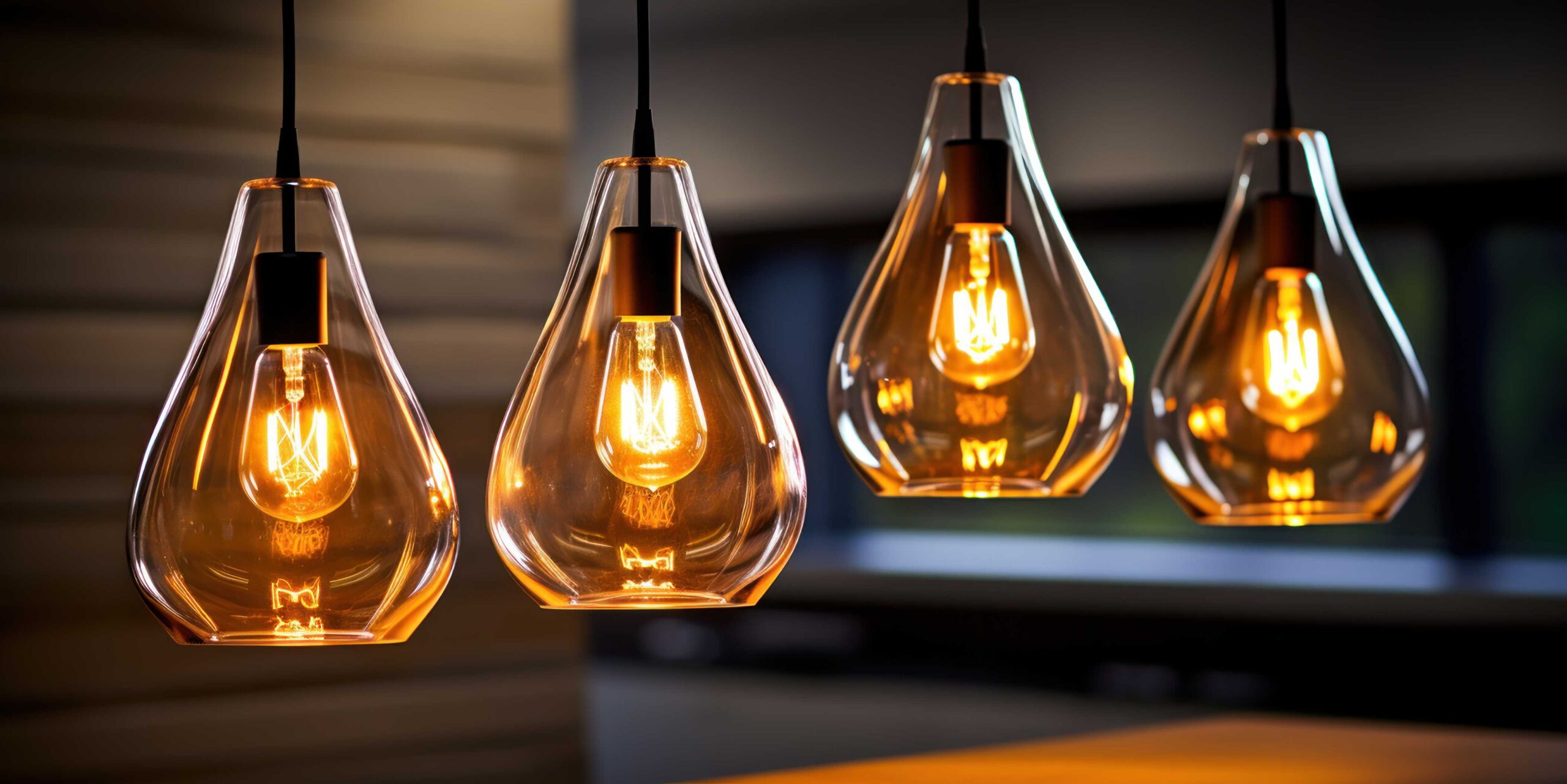
- Pendant lights : These are lights that hang from the ceiling with a chain cord, metal rod or a metal or a metal rod. These lights are suspended at a specific height based on the length of the cord.
Pendant lights are often used as decorated elements and can create a functional space right below where it is placed. These work very well on kitchen islands, dining tables and entryways. Pendant lights can be bought as a single unit or as a multi-light arrangement. It is very crucial to have a proper hanging height as to avoid obstructing slight sight lines.
- Flush mount and semi-flush mount : Flush mount lighting fixtures are attached directly to the ceiling with no gap between the ceiling and the light fixtures making it perfect for rooms with low ceiling heights. Semi-flush mount fixtures, on the other hand, hang slightly below the ceiling allowing for more of a decorative design.
Flush mount fixtures sit against the ceiling surface and provides great ambient lighting. Semi-flush mount fixtures work well in closets, hallways, and bedrooms where we want a visual play of light but do not have enough space for a chandelier or pendant.
- Track lighting : It consists of multiple light heads on a continuous track that carries electrical current. Track lighting offers exceptional flexibility and allows you to position the different lighting heads in different directions to illuminate your area of choice. And these lighting fixtures save space and can be used in areas that need adjustable or changing illumination such as art galleries, retail spaces, or home offices.
FAQs
- What is ambient lighting in interior design?
Ambient lighting is general lighting or the foundational illumination in a room. It forms as the base level of illumination in an area. It helps you fill the entire area and typically comes from ceiling mounted fixtures such as chandeliers, recessed lighting, or track lighting. It creates a comfortable level of brightness without harsh shadows and sets the entire mood and functionality of the space.
- Difference between task and accent lighting?
Task lighting and accent lighting are different because task lighting is functional illumination in which the light is particularly used for a certain type of task. This means that it can help you perform various tasks such as reading, cooking, applying makeup, or working at a desk without straining your eyes.
Accent lighting, on the other hand, are more creative and used for visual appeal. It draws attention to artwork, architectural details, and textured walls. It typically uses more light than ambient lighting so as to draw focus to that particular area.
- How to choose recessed lighting?
Whenever you are choosing recessed lighting for your space, here are some important considerations to make.
- Ceiling height and room size- Smaller recessed lighting fixtures work well for 8-foot ceilings and smaller rooms, whereas the 5-inch to 6-inch fixtures are standard for high ceiling and larger room spaces.
- Spacing – They should also be placed about half the distance from the wall.
- Recessed lightings also have different sort of trim styles, so make sure that you choose a trim style that suits your need the best. For example, adjustable trims help you direct light towards specific areas, whereas reflector trim maximizes brightness for a certain area.
- Recessed lightings can also use integrated LED versus replaceable bulbs. Hence, it is important to ensure to use the correct light source. LED-compatible lightings are more energy efficient and long-lasting.
- What are the best lighting fixtures for home?
The best lighting fixtures for your home depends on the kind of illumination you need and the room that you are looking to light.
- For your living room, use chandeliers or pending lighting that provide ambient light as well as create visually interesting appearance. These lights often become the center of attention and focal point in your entire space. You can also use task lighting through table lamps or floor ramps for reading areas.
- Recessed lights or flush mount lights work best in kitchens and then lights can also be used over islets or kitchen tops and dining areas to provide proper illuminations. Using under cabinet LED strip lights also help with illumination in the kitchen.
- Since your bedroom is the most important space in your house, you should be careful about the different sort of lights you’re using. You can also layer different lights in your bedroom which means the use of flush mount or semi-flush mounts for ambient lighting, bedside table, lamps for task lighting, and dimmer switches for mood lighting.
- Use of vanity lights on sides of the mirror or above helps with removing shadows and giving proper illumination. Recessed ceiling lights are also a great option for ambient lighting in the washroom.
- If you are looking to light up your office, then use overhead ambient lighting as well as desk lamps for reduced screen glare.